Struggling to find an effective way to lose fat and boost your fitness without leaving your house? High-Intensity Interval Training (HIIT) offers a powerful solution, allowing you to achieve significant fat loss and cardiovascular improvements with short, intense bursts of exercise. This guide provides a comprehensive, actionable plan to integrate HIIT into your home routine, helping you sculpt your body and elevate your health efficiently.
1. Introduction
What is HIIT and why is it effective for fat loss?
HIIT involves short periods of intense anaerobic exercise followed by brief recovery periods. This method maximizes calorie burn during and after your workout, making it incredibly time-efficient for fat loss. Its effectiveness stems from stimulating a higher metabolic rate.
Benefits of at-home HIIT workouts.
Working out at home removes barriers like gym memberships and travel time, making consistent exercise more accessible. You can perform effective HIIT workouts with minimal or no equipment, utilizing your body weight for a powerful session. This flexibility empowers you to prioritize your fitness on your own terms.
Who can benefit from an at-home HIIT plan?
Anyone looking to improve cardiovascular health, increase endurance, and significantly reduce body fat can benefit from an at-home HIIT plan. It’s particularly ideal for busy individuals who need to maximize their workout efficiency. Modifications are readily available, making it suitable for various fitness levels.
2. Understanding HIIT for Fat Loss
How HIIT workouts burn fat (EPOC effect, metabolism boost).
HIIT is exceptionally effective for fat loss due to the phenomenon known as Excess Post-exercise Oxygen Consumption (EPOC), or the “afterburn” effect. This means your body continues to burn calories at an elevated rate even after your workout is finished. The intense nature of HIIT also significantly boosts your metabolism for hours post-exercise.
The science behind short, intense bursts.
Short, intense bursts of exercise push your body into an anaerobic state, forcing it to work harder and adapt. This leads to improvements in both aerobic and anaerobic fitness, enhancing your body’s ability to utilize fat for fuel. A review published in the Journal of Obesity (2011) highlighted HIIT’s superior ability to reduce subcutaneous and abdominal fat compared to traditional steady-state cardio, attributing this to hormonal responses and elevated metabolic rate.
Setting realistic expectations for fat loss.
While highly effective, fat loss through HIIT requires consistency and patience. Expect gradual but significant improvements in body composition and overall fitness over several weeks. Combining HIIT with a balanced diet will yield the best and most sustainable results.
3. Essential Equipment for At-Home HIIT (Minimalist Approach)
Bodyweight exercises (no equipment needed).
Many highly effective HIIT exercises rely solely on your body weight. Movements like squats, lunges, push-ups, and planks form the foundation of challenging at-home routines. This makes HIIT accessible to everyone, regardless of budget or space.
Optional: Resistance bands, jump rope, yoga mat.
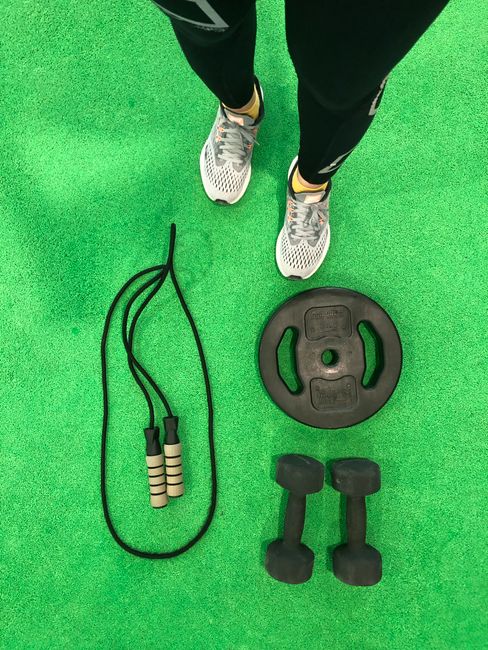
For added variety and intensity, consider investing in some inexpensive equipment. Resistance bands can amplify muscle engagement, a jump rope provides excellent cardio, and a yoga mat offers comfort and grip for floor exercises. These optional tools can elevate your home workout experience.
Creating a safe workout space.
Ensure you have enough clear space to move freely without hitting furniture or obstacles. A non-slip surface is crucial to prevent accidents, especially during dynamic movements. Good ventilation and comfortable workout attire will also enhance your experience.
4. Crafting Your At-Home HIIT Workout Plan
Structuring your workout: Warm-up, work intervals, rest intervals, cool-down.
Every effective HIIT session begins with a 5-10 minute warm-up to prepare your muscles and joints, followed by the intense work and rest intervals. Conclude with a 5-10 minute cool-down, including stretching, to aid recovery and flexibility. This structure is vital for injury prevention and optimal performance.
Determining work-to-rest ratios (e.g., 30/30, 40/20).
Common work-to-rest ratios include 1:1 (e.g., 30 seconds work, 30 seconds rest) for beginners and intermediates, or 2:1 (e.g., 40 seconds work, 20 seconds rest) for more advanced individuals. The key is to select a ratio that allows you to push hard during work periods while providing just enough recovery. Experiment to find what challenges you most effectively.
Workout duration and frequency for optimal results (e.g., 20-30 minutes, 3-4 times per week).
For optimal fat loss, aim for 20-30 minute HIIT sessions, including warm-up and cool-down. Performing these workouts 3-4 times per week on non-consecutive days allows for adequate muscle recovery and prevents overtraining. Consistency is far more impactful than isolated intense sessions.
Progressive overload techniques at home.
To continue seeing results, gradually increase the challenge of your workouts. You can achieve progressive overload at home by:
- Increasing work interval duration or decreasing rest time.
- Adding more rounds to your workout.
- Selecting more complex or plyometric exercises.
- Improving your exercise form and intensity during each repetition.
5. Sample At-Home HIIT Workout Routines for Fat Loss
Beginner HIIT Workout:
This routine focuses on foundational movements with ample recovery. Perform each exercise with good form, focusing on controlled movements. Remember to warm up and cool down thoroughly.
- Exercises: Jumping jacks, high knees, bodyweight squats, plank.
- Structure: 20 seconds work / 40 seconds rest for each exercise. Complete 3-4 rounds.
- Rest: Take 60-90 seconds rest between each full round.
Intermediate HIIT Workout:
Stepping up the intensity, this workout incorporates more challenging movements. Ensure you maintain proper form even as your heart rate rises. Adjust rest periods as needed.
- Exercises: Burpees (modified if needed), mountain climbers, alternating lunges, push-ups.
- Structure: 30 seconds work / 30 seconds rest for each exercise. Complete 4-5 rounds.
- Rest: Take 45-60 seconds rest between each full round.
Advanced HIIT Workout:
For those with a strong fitness base, this routine pushes your limits with dynamic and plyometric exercises. Focus on explosive power and minimal rest. Listen to your body and adjust if necessary.
- Exercises: Plyometric jumps (e.g., squat jumps), commando planks, single-leg deadlifts (bodyweight), sprint in place.
- Structure: 40 seconds work / 20 seconds rest for each exercise. Complete 5-6 rounds.
- Rest: Take 30-45 seconds rest between each full round.
How to choose the right exercises and modify them.
Select exercises that you can perform with proper form and that challenge you without causing pain. If an exercise is too difficult, find a modified version, such as knee push-ups instead of full push-ups, or step-back lunges instead of jumping lunges. Conversely, if an exercise feels too easy, increase the speed, range of motion, or add a plyometric element.
6. Maximizing Fat Loss Results with HIIT
Importance of proper form and technique.
Correct form is paramount in HIIT to prevent injuries and ensure muscle activation. Prioritize mastering the movement before increasing speed or intensity. Watching tutorial videos and even recording yourself can help refine your technique.
Integrating proper nutrition for fat loss.
Exercise alone is often insufficient for significant fat loss; nutrition plays a critical role. Focus on a balanced diet rich in whole foods, lean proteins, healthy fats, and complex carbohydrates. Calorie deficit, where you burn more calories than you consume, is fundamental for fat loss. A study in the American Journal of Clinical Nutrition (2018) emphasized that while exercise is crucial, dietary modifications, particularly reducing caloric intake, are key drivers for successful weight and fat loss outcomes.
Hydration and recovery (sleep, active recovery).
Adequate hydration is essential for athletic performance and recovery. Drink plenty of water throughout the day, especially before, during, and after your workouts. Prioritizing 7-9 hours of quality sleep each night is equally important, as this is when your body repairs and rebuilds muscle tissue. Incorporate active recovery days, like light walking or stretching, to aid muscle soreness and promote blood flow.
Listen to your body: Avoiding overtraining.
While pushing yourself is part of HIIT, overtraining can lead to fatigue, injury, and stalled progress. Pay attention to signs like persistent soreness, decreased performance, irritability, or disrupted sleep. Rest days are not a sign of weakness but a critical component of a sustainable fitness journey.
7. Common Mistakes to Avoid
Skipping warm-up or cool-down.
Neglecting these crucial phases drastically increases your risk of injury and reduces workout effectiveness. A warm-up prepares your body, and a cool-down aids in recovery and flexibility. Always dedicate time to both.
Not pushing hard enough during work intervals.
The “high-intensity” aspect of HIIT is non-negotiable for its fat-burning benefits. During work intervals, you should be breathing heavily and feeling challenged. If you can hold a conversation easily, you’re likely not pushing hard enough.
Neglecting consistency.
Sporadic workouts yield minimal results. The true power of HIIT for fat loss comes from consistent effort over time. Stick to your schedule, even on days when motivation is low.
Ignoring signs of injury.
Pain is your body’s way of signaling a problem. Do not push through sharp or persistent pain. Modify exercises, take rest days, or seek professional advice if you suspect an injury. Your long-term health is paramount.
8. Conclusion
Incorporating an at-home HIIT workout plan is a highly effective, time-efficient strategy for significant fat loss and improved fitness. By understanding its principles, structuring your routines intelligently, and maintaining consistency, you can transform your body and health from the comfort of your home. Remember to prioritize proper form, nutrition, and adequate recovery for the best results.
Embark on your HIIT journey today and unlock a healthier, more energetic you. Small, consistent efforts will lead to remarkable long-term gains!