Struggling with the visible signs of aging or thinning hair can be frustrating, impacting your confidence and well-being. Many seek effective, non-invasive solutions to rejuvenate their appearance and promote natural healing. Red Light Therapy (RLT) offers a promising, science-backed approach, utilizing specific wavelengths of light to stimulate cellular repair, boost collagen production, and encourage healthier skin and hair growth.
I. Introduction to Red Light Therapy
What is Red Light Therapy (RLT)?
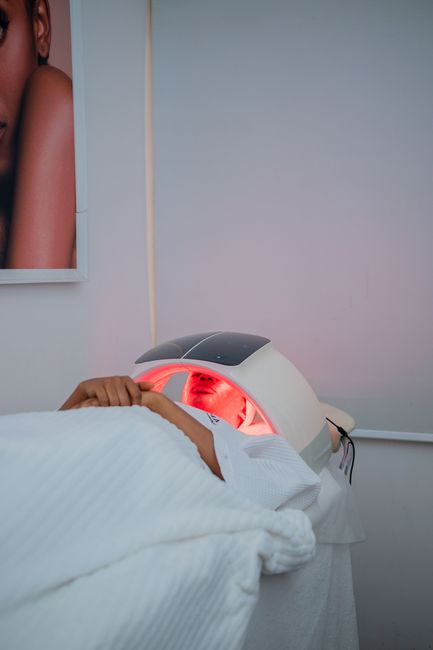
Red Light Therapy, also known as low-level light therapy (LLLT) or photobiomodulation (PBM), involves exposing the body to low-power red and near-infrared (NIR) light. Unlike ultraviolet (UV) light, RLT does not damage skin cells; instead, it offers therapeutic benefits by influencing cellular function without heat.
This non-invasive treatment uses specific wavelengths of light, typically between 600 and 900 nanometers, to penetrate the skin and reach cells. The treatment is pain-free and is gaining recognition for its diverse health applications.
Brief history and scientific background
The concept of using light for healing dates back centuries, but modern RLT gained prominence with NASA’s research in the 1990s. Scientists discovered that red light could accelerate plant growth in space and later found it beneficial for wound healing in astronauts.
Since then, extensive research has explored RLT’s potential across various medical and cosmetic fields. Its application for skin rejuvenation and hair stimulation has garnered significant attention from both the scientific community and consumers.
How RLT works at a cellular level (mitochondria, ATP production)
At its core, RLT works by targeting the **mitochondria**, often called the “powerhouses” of our cells. When red and near-infrared light penetrate the skin, they are absorbed by chromophores within the mitochondria, particularly cytochrome c oxidase.
This absorption triggers a cascade of cellular events, enhancing the production of **Adenosine Triphosphate (ATP)**, the primary energy currency of the cell. Increased ATP levels lead to improved cellular function, regeneration, and repair, which is crucial for healthy skin and hair.
II. Red Light Therapy for Skin Aging
The Science of Anti-Aging:
Collagen and Elastin Production
One of the most significant benefits of RLT for skin aging is its ability to stimulate the production of **collagen** and **elastin**. These proteins are vital for maintaining skin elasticity, firmness, and a youthful appearance.
As we age, collagen and elastin production naturally declines, leading to wrinkles and sagging skin. RLT helps reverse this process by energizing fibroblasts, the cells responsible for synthesizing these crucial structural proteins.
Improved Blood Circulation
RLT promotes improved blood flow to the treated areas. Enhanced circulation delivers more oxygen and essential nutrients to skin cells, fostering a healthier and more vibrant complexion.
This improved nutrient delivery also aids in the removal of waste products, contributing to overall skin health and regeneration. Better blood flow can give the skin a natural, healthy glow.
Reduced Inflammation and Oxidative Stress
Chronic inflammation and oxidative stress are major contributors to premature skin aging. Red light therapy has anti-inflammatory properties that can help soothe irritated skin and reduce redness.
Furthermore, RLT helps to mitigate oxidative stress by enhancing the body’s antioxidant defenses at a cellular level. This protection helps to shield skin cells from damage caused by free radicals, preserving their integrity.
Key Benefits for Skin:
Reduction of Fine Lines and Wrinkles
By boosting collagen and elastin synthesis, RLT effectively helps to plump the skin and reduce the appearance of fine lines and wrinkles. Regular treatment can lead to smoother, more youthful-looking skin.
According to a study published in the **Journal of Cosmetic and Laser Therapy** (2014), participants undergoing RLT showed significant improvements in skin complexion, skin feeling, and collagen density, leading to a visible reduction in wrinkles.
Improved Skin Tone and Texture
RLT contributes to a more even skin tone and refined texture. It can minimize pore size and reduce uneven pigmentation, leading to a smoother and more uniform complexion.
The cellular regeneration stimulated by RLT helps in replacing damaged cells with new, healthy ones, improving the overall quality of the skin’s surface. This can result in a softer and more radiant feel.
Enhanced Wound Healing and Scar Reduction
Red light therapy accelerates the natural healing process of the skin. It can be particularly beneficial for post-surgical recovery, minor cuts, and burns.
By promoting tissue repair and reducing inflammation, RLT can also help to minimize the visibility of scars. It assists in the orderly regeneration of skin cells, leading to less noticeable scarring over time.
Treatment of Acne and Rosacea
The anti-inflammatory effects of RLT can be highly beneficial for individuals suffering from acne and rosacea. It helps to calm inflamed skin and reduce the redness associated with these conditions.
While RLT doesn’t directly kill acne-causing bacteria like blue light therapy, its ability to reduce inflammation and promote healing contributes to clearer, healthier skin. It supports the skin’s natural ability to recover.
Expected Results and Timeline
Results from red light therapy for skin aging are not immediate but typically appear gradually with consistent use. Many individuals begin to notice improvements in skin texture and tone within **4-6 weeks** of regular sessions.
More significant reductions in fine lines, wrinkles, and improvements in skin firmness may become apparent after **2-3 months** of consistent treatment. Long-term use often yields the best and most sustained anti-aging benefits.
III. Red Light Therapy for Hair Growth
Understanding Hair Loss and RLT:
Mechanism of action on hair follicles
Red Light Therapy directly impacts hair follicles by stimulating their metabolic activity. The light penetrates the scalp to reach the cells within the hair follicles, particularly those in the dermal papilla.
This cellular stimulation extends the anagen (growth) phase of the hair cycle and encourages dormant follicles to re-enter an active growth phase. It essentially ‘wakes up’ the hair follicles to promote new growth.
Stimulation of dormant follicles
Many forms of hair loss involve follicles that become miniaturized or enter a prolonged dormant (telogen) phase. RLT helps to revitalize these follicles, encouraging them to produce thicker, healthier hair strands.
By increasing cellular energy and reducing inflammation, RLT creates a more optimal environment for hair growth. This process can lead to a noticeable increase in hair density and thickness over time.
Increased blood flow to the scalp
Similar to its effects on skin, RLT enhances blood circulation in the scalp. This increased blood flow ensures that hair follicles receive a richer supply of oxygen, nutrients, and growth factors.
Adequate blood supply is critical for healthy hair growth and for sustaining the active growth phase of hair follicles. Improved circulation can strengthen existing hair and support the emergence of new hair.
Conditions RLT May Address:
Androgenetic Alopecia (Male and Female Pattern Baldness)
Red Light Therapy is particularly promising for treating **Androgenetic Alopecia**, commonly known as male or female pattern baldness. This condition is characterized by a genetic predisposition and hormonal influences leading to progressive hair thinning.
Clinical studies suggest RLT can effectively stimulate hair growth in individuals with this condition. According to a review published in the **Journal of Clinical and Aesthetic Dermatology** (2018), RLT demonstrated efficacy in promoting hair growth and increasing hair density in both men and women with androgenetic alopecia, showing significant improvement compared to placebo groups.
Telogen Effluvium
Telogen Effluvium is a temporary form of hair loss often triggered by stress, illness, or hormonal changes, causing a large number of hairs to enter the resting (telogen) phase prematurely. RLT can help to shorten this resting phase.
By revitalizing follicles and promoting a return to the anagen growth phase, RLT may help accelerate recovery from telogen effluvium. It encourages the scalp to resume a healthy hair growth cycle more quickly.
Expected Results and Timeline for Hair Growth
Consistency is key when using RLT for hair growth, and results take time to become visible. Most users typically begin to see a reduction in hair shedding and initial signs of new hair growth within **3-6 months** of consistent treatment.
Significant improvements in hair thickness, density, and coverage often become noticeable after **6-12 months** of regular use. Continued maintenance sessions are usually recommended to sustain the benefits.
IV. Types of Red Light Therapy Devices
Professional vs. At-Home Devices
Red Light Therapy is available through professional clinics, often using large, powerful panels, and through a wide range of at-home devices. Professional treatments typically offer higher power output and more comprehensive coverage.
At-home devices provide convenience and cost-effectiveness, allowing for regular, consistent use which is crucial for results. When choosing an at-home device, understanding its specifications is important for effectiveness.
Panels, Helmets, Caps, Wands
The market offers various device types tailored to different needs. **Panels** are ideal for larger body areas or full-face treatments, while **helmets** and **caps** are specifically designed for scalp coverage to address hair loss.
**Wands** and smaller handheld devices offer targeted treatment for specific skin areas or for travel. Each device type offers distinct advantages based on the user’s primary application and convenience preferences.
Understanding Wavelengths (Red vs. Near-Infrared)
RLT devices typically emit light in two main spectrums: **red light** (around 630-700 nm) and **near-infrared (NIR) light** (around 800-900 nm). Red light is more visible and has a shallower penetration, primarily benefiting skin surface issues like collagen production.
Near-infrared light penetrates deeper into tissues, reaching muscles, bones, and hair follicles, making it ideal for muscle recovery, inflammation reduction, and stimulating hair growth. Many effective devices utilize a combination of both wavelengths for comprehensive benefits.
Key Features to Consider (Irradiance, Flicker)
When selecting an RLT device, **irradiance** (power density) is a critical factor, measured in mW/cm². Higher irradiance generally means more effective treatment in shorter sessions. Always check third-party testing for accurate figures.
Another important feature is the absence of **flicker**, which refers to rapid light pulsations that can cause eye strain or headaches for some users. Reputable devices ensure stable, continuous light emission. Consider also factors like beam angle and size of the treatment area.
V. How to Safely Use Red Light Therapy at Home
Recommended Session Duration and Frequency
For most at-home RLT devices, typical session durations range from **10 to 20 minutes** per treatment area. The specific time depends on the device’s power output (irradiance) and the target condition.
For optimal results, consistency is crucial; aim for **3-5 sessions per week**. Daily use is often well-tolerated and can accelerate results, but always follow the manufacturer’s specific guidelines for your device.
Proper Device Placement and Distance
Ensure the device is positioned correctly for effective light delivery. For skin, hold the device approximately **6 to 12 inches** (15-30 cm) away from the target area, allowing the light to cover the desired surface without being too close.
For hair growth, ensure the device (e.g., helmet, cap, or panel) provides even coverage over the entire scalp. Maintaining the recommended distance maximizes light penetration and ensures uniform exposure.
Eye Protection
While red and near-infrared light are generally considered safe for the eyes at therapeutic levels, it is highly recommended to use **eye protection** during RLT sessions. This is especially true when using higher-power devices or treating areas close to the face.
Many RLT devices come with protective goggles. Always wear them to prevent potential eye strain or discomfort, particularly from the intense brightness of some panels.
Contraindications and Precautions
While RLT is largely safe, certain precautions should be observed. Individuals who are pregnant, have a history of seizures, or are taking photosensitizing medications should consult a healthcare professional before starting RLT.
Avoid using RLT on areas with open wounds, active infections, or malignant tumors without medical advice. Always conduct a patch test on a small skin area first to ensure no adverse reaction occurs.
VI. Potential Side Effects and Safety Considerations
Mild, temporary side effects (e.g., redness, eye strain)
Red Light Therapy is generally well-tolerated, with a low risk of side effects. Any adverse reactions are typically mild and temporary, often resolving shortly after the session.
Potential side effects may include temporary skin redness, warmth, or slight tenderness in the treated area. Some individuals might experience mild eye strain if proper eye protection is not used.
Consulting a healthcare professional
Despite its safety profile, it is always prudent to consult a healthcare professional before starting any new therapy, including RLT. This is especially important if you have pre-existing medical conditions.
A doctor can provide personalized advice, confirm if RLT is appropriate for your specific health concerns, and help integrate it safely into your overall wellness routine. They can also address any concerns about device compatibility with other treatments.
VII. Conclusion
Red Light Therapy offers a compelling, non-invasive solution for addressing common concerns related to skin aging and hair growth. By leveraging the power of specific light wavelengths, RLT stimulates cellular energy, boosts collagen production, and enhances circulation.
These mechanisms collectively contribute to smoother, more youthful skin and stronger, denser hair. As research continues to expand, RLT is poised to become an even more integral part of holistic wellness and beauty regimens.
Embrace the potential of RLT with informed usage and always consider consulting a healthcare professional to ensure it aligns with your individual health goals. Consistent and proper application holds the key to unlocking its full range of benefits for a revitalized appearance.