Introduction
Experiencing occasional brain fog or struggling with memory recall can be frustrating, impacting daily productivity and overall well-being. Many seek natural solutions to sharpen their mental edge and maintain cognitive vitality as they age. Lion’s Mane mushroom (Hericium erinaceus) is emerging as a powerful natural ally, offering a promising solution to support and enhance brain health.
What is Lion’s Mane Mushroom? (Hericium erinaceus)
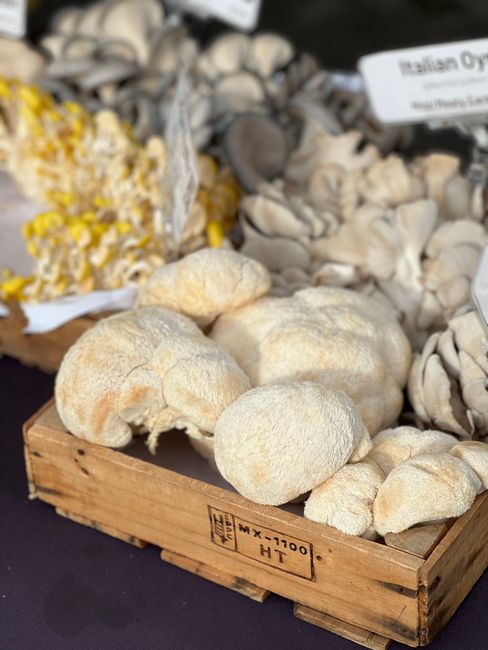
Lion’s Mane is a unique edible and medicinal mushroom, easily recognized by its long, cascading spines that resemble a lion’s mane. This fascinating fungus grows on hardwood trees and has been a staple in traditional Eastern medicine for centuries. Its rich history points to its use not just as a culinary delight but also for its profound health-promoting properties.
Brief History and Traditional Uses in Eastern Medicine
In ancient China and Japan, Lion’s Mane was revered by Buddhist monks and consumed for its purported ability to enhance concentration and deepen spiritual focus. Traditional practitioners often used it to support digestion, boost immune function, and, notably, to nourish the brain and nervous system. Its long-standing traditional use underscores its esteemed position in holistic health.
Growing Popularity in Western Wellness for Brain Health
Today, Lion’s Mane has garnered significant attention in Western wellness circles, particularly for its potential cognitive benefits. Modern scientific inquiry is beginning to validate many of its traditional uses, with a focus on its neuroprotective and neuroregenerative properties. It is now widely available in various supplement forms, reflecting a global interest in natural brain support.
Section 1: The Scientific Basis of Lion’s Mane’s Cognitive Impact
The remarkable effects of Lion’s Mane on cognitive function are attributed to its unique bioactive compounds. These compounds work through several mechanisms to support brain health, making it a subject of extensive research. Understanding these mechanisms reveals why this mushroom is so potent for mental clarity and memory.
Sub-section 1.1: Neurogenesis and Nerve Growth Factor (NGF) Stimulation
One of the most compelling aspects of Lion’s Mane is its ability to stimulate neurogenesis, the growth of new brain cells. It achieves this by promoting the production of Nerve Growth Factor (NGF), a crucial protein. NGF is essential for the survival, maintenance, and regeneration of neurons, which are the building blocks of our brain.
Explanation of NGF’s role in brain cell growth and maintenance
NGF plays a vital role in neuronal plasticity, allowing the brain to adapt and form new connections, which is fundamental for learning and memory. Without sufficient NGF, neurons can deteriorate, potentially contributing to cognitive decline. Lion’s Mane helps maintain optimal NGF levels, supporting overall brain cellular health.
How erinacines and hericenones in Lion’s Mane contribute to NGF production
The key active compounds responsible for this NGF-boosting effect are erinacines and hericenones, found exclusively in Lion’s Mane. These unique molecules can cross the blood-brain barrier, directly stimulating NGF synthesis within the brain itself. This mechanism is thought to be central to its neuroregenerative potential.
Sub-section 1.2: Anti-inflammatory and Antioxidant Properties
Chronic inflammation and oxidative stress are known contributors to cognitive impairment and neurodegenerative diseases. Lion’s Mane exhibits potent anti-inflammatory and antioxidant properties that help combat these detrimental processes in the brain. Its ability to neutralize free radicals is crucial for cellular protection.
Reducing oxidative stress in the brain
Oxidative stress occurs when there’s an imbalance between free radicals and antioxidants in the body, leading to cellular damage. Lion’s Mane is rich in antioxidant compounds that can scavenge these harmful free radicals, protecting delicate brain cells from damage. This protection is vital for maintaining long-term cognitive function.
Impact of inflammation on cognitive function and neurodegenerative processes
Inflammation in the brain, often referred to as neuroinflammation, can disrupt neural communication and contribute to the progression of conditions like Alzheimer’s and Parkinson’s disease. By reducing systemic and cerebral inflammation, Lion’s Mane may help preserve cognitive abilities and mitigate neurodegenerative risks. Research suggests its compounds can modulate inflammatory pathways.
Sub-section 1.3: Myelin Sheath Support and Protection
Efficient communication between brain cells relies heavily on the integrity of the myelin sheath. This fatty layer insulates nerve fibers, allowing electrical impulses to travel quickly and effectively. Maintaining a healthy myelin sheath is paramount for rapid thought processing and motor control.
The importance of myelin for efficient neural communication
Damage to the myelin sheath, as seen in demyelinating diseases, can severely impair neurological function, leading to slowed cognitive processing and coordination issues. Lion’s Mane is being explored for its potential role in supporting myelin health. Studies indicate its compounds might contribute to myelin repair and maintenance, although more human research is needed.
Lion’s Mane’s potential role in maintaining myelin integrity
While research is ongoing, preliminary findings suggest that Lion’s Mane may support the production of myelin and protect existing myelin from degradation. This potential role could have significant implications for brain health, ensuring robust and efficient neural signaling. Further investigation will clarify its exact mechanisms in this area.
Section 2: Specific Cognitive Benefits and Research Findings
Beyond its foundational scientific mechanisms, Lion’s Mane has been linked to several specific cognitive enhancements. These benefits range from sharpening memory to improving mood and protecting brain cells. The growing body of research continues to uncover the full spectrum of its neuro-modulatory effects.
Sub-section 2.1: Enhancing Memory and Learning
Many individuals seek Lion’s Mane to bolster their memory and improve learning capabilities. Its ability to stimulate NGF production is a key factor in these observed benefits. Enhanced neurogenesis directly supports the brain’s capacity to form and retrieve memories, making learning more efficient.
Discussion of studies on spatial and recognition memory
Several studies, particularly in animal models, have demonstrated that Lion’s Mane can significantly improve both spatial and recognition memory. For instance, research published in the Journal of Biomedical Science (2013) highlighted improvements in memory tasks in mice supplemented with Lion’s Mane extract. This suggests its potential for enhancing various aspects of memory recall.
Potential for improvement in age-related cognitive decline
Human clinical trials have also shown promising results for age-related cognitive decline. A study published in Phytotherapy Research (2008) found that Japanese adults with mild cognitive impairment who took Lion’s Mane daily showed significant improvements in cognitive function scores compared to a placebo group. These findings indicate its potential as a natural intervention for maintaining mental acuity in older adults.
Sub-section 2.2: Improving Focus, Concentration, and Mental Clarity
In today’s fast-paced world, many struggle with maintaining focus and battling “brain fog.” Lion’s Mane is increasingly recognized for its ability to alleviate these symptoms, promoting clearer thinking and sustained attention. This makes it popular among students and professionals alike.
Addressing symptoms of “brain fog”
“Brain fog” often manifests as difficulty concentrating, impaired memory, and mental fatigue. The neuroprotective and anti-inflammatory properties of Lion’s Mane may help clear this fog by optimizing brain environment. Users often report a greater sense of clarity and reduced mental fatigue after consistent use.
Impact on sustained attention and cognitive performance
By supporting healthy neuronal function and reducing oxidative stress, Lion’s Mane can contribute to improved sustained attention. This means a better ability to concentrate on tasks for longer periods without distraction. Enhanced cognitive performance, including faster reaction times and improved executive function, has been observed in various studies.
Sub-section 2.3: Mood Regulation and Stress Reduction
Cognitive function is intricately linked with mood and stress levels. Lion’s Mane may offer benefits beyond direct cognitive enhancement by positively influencing mood and helping to reduce stress. This holistic approach supports overall mental well-being.
Exploring the gut-brain axis connection
Emerging research highlights the significant connection between the gut microbiome and brain health, known as the gut-brain axis. Lion’s Mane has prebiotic properties that can support a healthy gut flora, which in turn, can positively influence mood and reduce anxiety. A balanced gut contributes to a balanced mind.
Evidence for anxiolytic (anti-anxiety) and antidepressant-like effects
Several animal studies and some preliminary human research suggest Lion’s Mane may possess anxiolytic and antidepressant-like effects. A study published in Biomedical Research (2010) found that women consuming Lion’s Mane cookies for four weeks reported reduced irritation and anxiety. While more extensive human trials are needed, these findings are promising for mood regulation.
Sub-section 2.4: Neuroprotective Effects
Beyond stimulating growth, Lion’s Mane also acts as a powerful neuroprotector. It helps shield brain cells from various forms of damage that can lead to cognitive decline. This protective action is a critical aspect of its overall brain health benefits.
General overview of how Lion’s Mane may help protect brain cells from damage (without making medical claims)
Through its antioxidant and anti-inflammatory properties, Lion’s Mane helps to create a healthier environment for neurons. It may protect against damage caused by toxins, ischemia, and age-related degradation, contributing to the longevity and optimal function of brain cells. This comprehensive protection is what makes Lion’s Mane a holistic supplement for brain vitality.
Section 3: How to Incorporate Lion’s Mane for Cognitive Support
Integrating Lion’s Mane into your routine can be simple, given its versatility. Understanding the different forms and general usage guidelines will help you make an informed choice. Always remember to consult with a healthcare professional before starting any new supplement regimen, especially if you have underlying health conditions.
Sub-section 3.1: Forms of Lion’s Mane: Fresh, Dried, and Supplement Types
Lion’s Mane is available in various forms, each offering different ways to consume this beneficial mushroom.
- Culinary uses of fresh Lion’s Mane: Fresh Lion’s Mane can be sautéed, roasted, or even fried, offering a unique texture often compared to seafood like crab or lobster. It can be a delicious addition to various dishes.
- Common supplement formats: powders, capsules, extracts, tinctures: For concentrated cognitive benefits, supplements are popular. They come as powders (which can be added to smoothies or coffee), capsules for convenience, liquid extracts, or tinctures for sublingual absorption.
Sub-section 3.2: General Dosage Guidelines (Emphasize that this is not medical advice and to consult a professional)
While specific dosages can vary, general guidelines from research and product recommendations can provide a starting point. It’s crucial to begin with a lower dose and gradually increase it, monitoring your body’s response.
- Typical ranges observed in research or common use: Many studies and common supplement dosages range from 500 mg to 3,000 mg of extract per day, often divided into two doses. Always check the specific product’s instructions as extract potency varies.
- Considerations for optimal timing (e.g., morning vs. evening): Some prefer taking Lion’s Mane in the morning to support focus throughout the day, while others find evening doses beneficial for promoting restful sleep and brain repair. Experiment to find what works best for your body and schedule.
Section 4: Important Considerations and Potential Side Effects
While Lion’s Mane is generally well-tolerated, it’s essential to be aware of potential side effects and interactions. Always prioritize safety and consult with a healthcare provider before incorporating any new supplement. This is especially true if you have existing health conditions or are taking other medications.
Sub-section 4.1: Minor Digestive Discomfort
Some individuals may experience mild digestive upset, such as stomach discomfort or diarrhea, especially when starting with higher doses. This can often be mitigated by beginning with a smaller dose and gradually increasing it, or by taking the supplement with food. If discomfort persists, discontinue use and consult a professional.
Sub-section 4.2: Allergic Reactions (Rare)
As with any natural product, allergic reactions are possible, though rare. Symptoms might include skin rash, itching, or difficulty breathing. If you experience any signs of an allergic reaction, seek immediate medical attention. It’s advisable to do a patch test or start with a very small amount if you have known mushroom allergies.
Sub-section 4.3: Potential Drug Interactions (e.g., with anticoagulants, antidiabetics)
Lion’s Mane may have blood-thinning properties and could potentially interact with anticoagulant medications, increasing the risk of bleeding. It might also affect blood sugar levels, potentially interacting with antidiabetic drugs. Always discuss supplement use with your doctor if you are on medication.
Sub-section 4.4: Who Should Exercise Caution or Avoid (Pregnant/nursing individuals, those with bleeding disorders, pre-surgical patients)
Pregnant or nursing individuals should avoid Lion’s Mane due to a lack of sufficient safety research in these populations. Individuals with bleeding disorders or those scheduled for surgery should also exercise caution or avoid it due to its potential blood-thinning effects. It’s always best to err on the side of caution.
Sub-section 4.5: Importance of Quality and Sourcing for Purity and Potency
The quality of Lion’s Mane supplements can vary widely. It is crucial to choose products from reputable manufacturers that provide third-party testing for purity, potency, and absence of contaminants like heavy metals or pesticides. Look for supplements made from the fruiting body, as it contains higher concentrations of beneficial compounds.
Conclusion
Lion’s Mane mushroom stands out as a fascinating and potent natural compound for supporting cognitive health. Its unique ability to stimulate nerve growth factor, reduce inflammation, and offer neuroprotection positions it as a promising ally in the quest for optimal brain function. From enhancing memory and focus to potentially improving mood, its benefits are wide-ranging.
While research continues to unfold the full extent of its capabilities, the existing evidence strongly supports its role in promoting neurogenesis and overall brain vitality. Integrating Lion’s Mane into your wellness routine, under the guidance of a healthcare professional, could be a valuable step towards a sharper, clearer mind. Embrace a holistic approach to brain health, where nature’s intelligence can truly shine.