Are you troubled by signs of skin aging like wrinkles and fine lines, or experiencing frustrating hair loss and thinning? Many individuals seek effective, non-invasive solutions to these common concerns, which can significantly impact self-confidence.
The good news is that Red Light Therapy (RLT) offers a promising, drug-free approach to revitalize your skin and stimulate healthier hair growth by leveraging specific wavelengths of light to promote cellular repair and regeneration.
This comprehensive guide will explore how RLT works, its remarkable benefits for skin rejuvenation and hair health, and what you need to know for safe and effective use.
I. Introduction to Red Light Therapy
A. What is Red Light Therapy (RLT)?
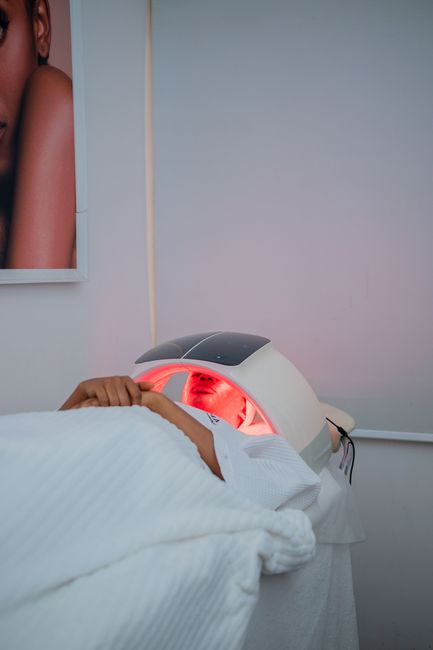
Red Light Therapy (RLT) is a therapeutic technique that uses low-level red and near-infrared (NIR) light to treat various skin and health conditions. It is a non-invasive, gentle treatment that has gained popularity for its wide range of potential benefits.
The concept behind RLT dates back to the 1960s with early research on the effects of laser light on tissues, evolving significantly into the widespread use of LED-based devices today.
B. How Red Light Therapy Works
RLT operates on the principle of photobiomodulation, where specific wavelengths of light penetrate the skin to a cellular level. These wavelengths, typically between 630 nm (red light) and 850 nm (near-infrared light), are absorbed by chromophores within the cells.
Primarily, these light photons are absorbed by the mitochondria, often called the “powerhouses” of the cells. This absorption stimulates increased adenosine triphosphate (ATP) production, which is crucial for cellular energy and repair, thereby enhancing various cellular functions including regeneration and anti-inflammatory responses.
II. Red Light Therapy for Skin Aging and Rejuvenation
A. Understanding Skin Aging
Skin aging is a complex biological process influenced by both intrinsic (genetic) and extrinsic (environmental) factors. Key contributors include the natural decline in collagen and elastin production, increased oxidative stress from free radicals, and cumulative damage from sun exposure (photoaging).
These factors lead to visible signs such as wrinkles, fine lines, loss of elasticity, uneven skin tone, and a rough texture. Addressing these underlying causes is key to effective skin rejuvenation.
B. Benefits of RLT for Skin
Red Light Therapy offers multiple advantages for combating the signs of aging and improving overall skin health. Its cellular-level action makes it a powerful tool in aesthetic and dermatological care.
1. Collagen and Elastin Production
RLT is known to stimulate fibroblasts, the cells responsible for producing collagen and elastin, essential proteins for skin structure and elasticity. Increased collagen synthesis helps to plump the skin and reduce the appearance of sagging.
Research consistently shows that exposure to red and near-infrared light can significantly enhance the skin’s natural regenerative processes. This leads to a more youthful and resilient complexion over time.
2. Reduction of Wrinkles and Fine Lines
By boosting collagen and elastin, RLT directly contributes to smoothing out wrinkles and fine lines. The enhanced cellular repair also helps to restore the skin’s integrity.
Studies have demonstrated a noticeable improvement in skin texture and a reduction in the depth of facial wrinkles among individuals undergoing regular red light treatments.
3. Improvement in Skin Tone and Texture
RLT can help to minimize hyperpigmentation and redness, leading to a more even and radiant skin tone. It also refines skin texture, making it softer and smoother to the touch.
The therapy’s ability to improve circulation also plays a role in delivering vital nutrients to skin cells, further enhancing its overall appearance.
4. Enhanced Wound Healing and Scar Reduction
The accelerated cellular regeneration fostered by RLT is highly beneficial for wound healing. It can reduce inflammation and promote tissue repair, leading to faster recovery times.
Furthermore, RLT has shown promise in minimizing the appearance of scars by improving collagen organization during the healing process, making them less noticeable over time.
5. Anti-inflammatory Effects and Benefits for Skin Conditions
Red light has potent anti-inflammatory properties, which can be particularly helpful for managing chronic skin conditions. Conditions like acne, rosacea, and psoriasis often involve underlying inflammation.
By reducing inflammation and promoting healing, RLT can soothe irritated skin and contribute to clearer, healthier skin. This makes it a valuable adjunct therapy for various dermatological concerns.
III. Red Light Therapy for Hair Growth and Health
A. Understanding Hair Loss and Thinning
Hair loss and thinning are widespread issues with various underlying causes, including genetic predispositions like androgenetic alopecia (pattern baldness), hormonal changes, stress-induced telogen effluvium, and nutritional deficiencies.
The hair growth cycle consists of distinct phases (anagen, catagen, telogen), and disruptions in this cycle, often leading to dormant or miniaturized follicles, result in visible hair loss.
B. Benefits of RLT for Hair
Red Light Therapy offers a non-pharmacological approach to stimulate hair follicles and improve scalp health, promoting thicker, stronger hair.
1. Stimulation of Hair Follicles
RLT can awaken dormant hair follicles and extend the anagen (growth) phase of the hair cycle. The light energy penetrates the scalp, reaching the mitochondria in follicle cells.
This energy absorption enhances cellular metabolism and encourages follicles that have become miniaturized or inactive to re-enter a growth phase, leading to new hair production.
2. Increased Blood Circulation to the Scalp
One of the key benefits of RLT for hair health is its ability to boost blood flow to the scalp. Enhanced circulation ensures that hair follicles receive a richer supply of oxygen and essential nutrients.
This improved nutrient delivery is vital for sustaining healthy hair growth and strengthening existing hair strands, contributing to overall scalp vitality.
3. Reduction of Hair Miniaturization and Promotion of Thicker Hair
Hair miniaturization, where hair follicles shrink and produce progressively thinner, shorter hairs, is a hallmark of conditions like androgenetic alopecia. RLT can help reverse this process.
By invigorating the follicles and improving their function, RLT encourages the production of thicker, more robust hair strands, thereby increasing hair density and volume.
4. Potential for Hair Regrowth
Multiple studies and clinical observations have indicated the potential of RLT to stimulate hair regrowth in individuals with various forms of hair loss. Consistent application is generally required for noticeable results.
While results can vary, the scientific community recognizes RLT as a promising adjunctive therapy for promoting hair growth and combating hair thinning.
IV. Safety, Usage, and Considerations
A. Is Red Light Therapy Safe?
Generally, Red Light Therapy is considered safe and well-tolerated with minimal side effects when used correctly. It is non-invasive and does not use harmful UV light.
Potential side effects are rare and mild, such as temporary eye strain if protective eyewear isn’t used or slight skin redness. Consult a healthcare professional if you have pre-existing conditions or concerns.
B. General Usage Guidelines
For optimal results, consistency is key with RLT. Typical recommendations involve regular sessions, often 3-5 times per week, for durations ranging from 10 to 20 minutes per session.
Realistic expectations are important; visible improvements in skin and hair typically require several weeks to months of consistent treatment, as cellular regeneration is a gradual process.
C. What to Look For in a Red Light Therapy Device
When considering a general red light therapy device, understanding key specifications can help ensure effectiveness and safety. Focus on devices that emit specific wavelengths known to be effective.
- Wavelengths: Look for devices offering red light (around 630-670 nm) and/or near-infrared (around 810-850 nm) wavelengths, as these have been most studied for skin and hair benefits.
- Irradiance and Power Density: Higher irradiance (light power output) generally translates to more effective treatment, though always prioritize safety and manufacturer guidelines.
- Safety Certifications: Ensure any device you consider has relevant safety certifications and comes from a reputable manufacturer, even for at-home use.
V. Conclusion
A. Summary of Key Benefits for Skin Aging and Hair Growth
Red Light Therapy stands out as a versatile, non-invasive treatment offering significant benefits for both skin rejuvenation and hair health. It works by stimulating cellular energy production, boosting collagen and elastin, and enhancing circulation.
From reducing wrinkles and improving skin tone to stimulating dormant hair follicles and promoting thicker hair, RLT offers a holistic approach to address common aesthetic and wellness concerns.
B. The Future of Red Light Therapy in Wellness and Aesthetics
As research continues to uncover the full potential of photobiomodulation, Red Light Therapy is poised to play an even larger role in both clinical and at-home wellness routines. Its gentle yet effective nature makes it an attractive option for those seeking natural regenerative solutions.
Advances in device technology and a deeper understanding of light-tissue interactions will likely expand its applications and accessibility in the coming years, solidifying its place in modern aesthetics.
C. Encouragement for Further Research and Consultation with Professionals
While the benefits of RLT are increasingly recognized, individuals are encouraged to continue researching and to consult with dermatologists or healthcare professionals. This ensures that RLT is an appropriate treatment for their specific skin or hair concerns.
Professional guidance can help tailor treatment plans and manage expectations, leading to the best possible outcomes for your unique needs.