How to Significantly Improve Your VO2 Max and Aerobic Capacity
Significantly improving your VO2 Max and overall aerobic capacity fundamentally involves targeted exercise interventions that drive cardiovascular and muscular adaptations, with high-intensity interval training (HIIT) and consistent moderate-intensity work emerging as highly effective strategies.
Understanding VO2 Max and Its Importance
VO2 Max, or maximal oxygen uptake, quantifies the maximum rate at which your body can consume and utilize oxygen during strenuous exercise. It stands as a pivotal indicator of cardiorespiratory fitness and aerobic endurance, reflecting the efficiency of your oxygen transport and utilization systems from lungs to working muscles. A higher VO2 Max is generally associated with better athletic performance and a reduced risk of various chronic diseases.
Key Active Mechanisms and Cellular Pathways
Enhancing VO2 Max is a complex physiological process that relies on consistent training to optimize the entire oxygen transport and utilization chain. These adaptations occur across several interconnected body systems.
Cardiovascular System Adaptations
The most significant determinant of VO2 Max is an increase in maximal cardiac output, which refers to the total volume of blood pumped by the heart per minute. Regular aerobic training increases the heart’s stroke volume—the amount of blood pumped per beat—primarily through an increase in left ventricular chamber size and contractility. This results in a stronger, more efficient heart capable of delivering more oxygenated blood to working muscles.
Endurance training also stimulates the growth of new capillaries within muscle tissue, enhancing capillarization. This increased capillary density shortens the diffusion distance for oxygen and nutrients from blood to muscle cells, and for waste products like carbon dioxide and lactate from muscles back to the blood, thereby improving gas exchange efficiency. Furthermore, consistent training can increase blood plasma volume, contributing to total blood volume and supporting increased stroke volume.
Muscular System Adaptations
Muscular adaptations are crucial for efficient oxygen utilization. Endurance training leads to an increase in the number and size of mitochondria—the cellular powerhouses responsible for aerobic energy production—within muscle cells. This is accompanied by an upregulation of enzymes involved in the Krebs cycle and electron transport chain, improving the muscles’ capacity to use oxygen to produce ATP (energy).
Myoglobin, an oxygen-binding protein in muscle tissue, also increases with aerobic training. This enhances oxygen storage within the muscle, providing an immediate oxygen reserve. Trained muscles also become more efficient at extracting oxygen from arterial blood, a process known as improved oxygen extraction or A-vO2 difference, facilitated by increased capillary density and mitochondrial capacity.
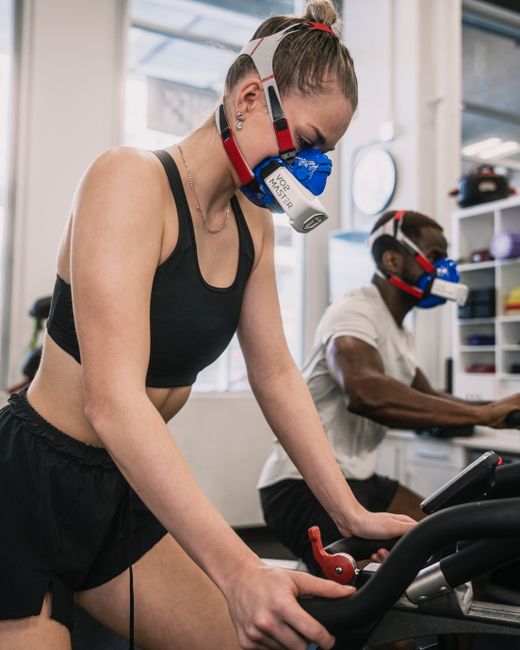
Effective Training Strategies for Improving VO2 Max
Various exercise modalities can contribute to an improved VO2 Max, with structured and progressive training being paramount. Combining different intensities often yields the most comprehensive benefits.
High-Intensity Interval Training (HIIT)
HIIT involves short bursts of intense anaerobic exercise followed by brief recovery periods. Research consistently shows that HIIT can produce significant gains in VO2 Max, often surpassing those achieved with moderate-intensity continuous training. Longer high-intensity intervals, typically lasting 3 to 5 minutes, have been particularly effective in maximizing these improvements.
Moderate-Intensity Continuous Training
While HIIT is highly potent, moderate-intensity continuous training (MICT), such as steady-state cardio, also plays a vital role. Consistent MICT contributes to foundational aerobic adaptations, supporting the body’s ability to sustain effort over longer durations and complementing the high-end improvements from HIIT.
Threshold Training and Long-Distance Runs
Incorporating threshold runs, where effort is sustained just below the lactate threshold, and longer, steady-state runs can further enhance aerobic capacity. These methods improve the body’s efficiency at higher intensities and increase overall endurance.
Real-World User Feedback: Practical Pros and Cons
Community discussions highlight a diverse range of experiences in improving VO2 Max. Many users emphasize the effectiveness of combining different workout types, often dedicating one high-intensity “zone 4” session and one longer, moderate-intensity “zone 2” session weekly to optimize cardiorespiratory fitness.
While HIIT is a popular topic, individuals also report improvements through modalities like threshold runs, long-distance steady-state efforts, and consistent easy-paced sessions, suggesting a holistic approach encompassing various intensities can be beneficial. A recurring theme is the crucial role of consistency; regular training over time, even with less intense approaches, is essential for sustained gains.
Users frequently note significant individual variability, where training responses can differ, leading to some frustration despite adherence to recommended protocols. While athletes often report performance gains like faster times, the impact on general daily well-being is not always as profoundly articulated by all. Many rely on wearable technology to track estimated VO2 Max, finding motivation in seeing these numbers improve, while acknowledging these are approximations.
Scientific References & Clinical Studies
- Milanović, Z., Sporiš, G., & Weston, M., Sports Medicine, 2015: This meta-analysis concluded that high-intensity interval training (HIIT) produced significantly greater gains in VO2 Max (an average of 4.9 ml/kg/min) compared to moderate-intensity continuous training (average of 3.5 ml/kg/min) in healthy adults.
- Bacon, A. P., Carter, R. E., O’Connor, D., & Jeffries, O., PLoS ONE, 2013: This study indicated that longer high-intensity intervals (typically lasting 3 to 5 minutes) were particularly effective, yielding larger changes in VO2 Max (0.8 to 0.9 L/min) compared to shorter interval durations.
- Wisløff, U., et al., Circulation, 2007: This landmark study demonstrated that aerobic interval training led to remarkably significant gains in peak oxygen uptake (around 46%) in patients with coronary artery disease when compared to moderate continuous training.
- Fu, Q., & Levine, B. D., Exercise and Sport Sciences Reviews, 2018: This review synthesizes research showing that structured exercise programs, even for previously sedentary middle-aged and older adults, can result in substantial improvements in VO2 Max (e.g., an 18% gain over two years).
Medical Disclaimer: The information provided in this article is for educational and informational purposes only and does not constitute professional medical advice, diagnosis, or treatment. Always consult a qualified healthcare provider before starting any new dietary supplement, nutrition plan, or fitness program.
Affiliate Disclosure: Some links in this article may be affiliate links. If you purchase through these links, verifiedpicks.net may earn a small commission at no additional cost to you. We only highlight products researched for scientific merit.