Addressing concerns about skin aging and hair loss often leads individuals to seek effective, non-invasive solutions. Many struggle with finding treatments that genuinely deliver on their promises without harsh side effects. Fortunately, Red Light Therapy (RLT) offers a promising, science-backed approach to rejuvenate skin and stimulate hair growth by targeting cellular functions, providing a gentle yet powerful solution.
I. Introduction to Red Light Therapy
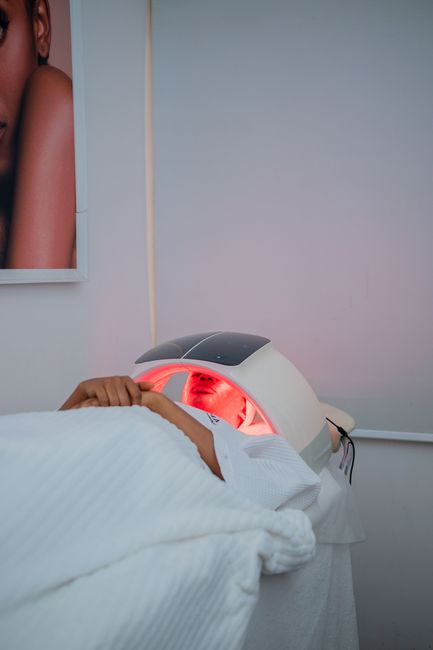
Red Light Therapy (RLT), also known as Photobiomodulation (PBM), is a non-invasive treatment that uses specific wavelengths of red and near-infrared light. This therapy helps improve cellular function, offering a natural way to support the body’s healing processes.
Once considered a niche treatment, RLT has gained significant popularity due to its diverse potential applications, particularly in wellness and beauty. Its use ranges from professional clinical settings to convenient at-home devices, making it accessible to a broader audience.
II. How Red Light Therapy Works: The Science Explained
Understanding Wavelengths and Cellular Absorption
RLT utilizes specific wavelengths, primarily between 630 to 700 nanometers for red light and 700 to 1000 nanometers for near-infrared light. These particular wavelengths can penetrate the skin and tissues to reach cells without causing heat damage.
Once absorbed, these light photons stimulate various biological processes at a cellular level. This selective absorption is key to understanding how RLT exerts its therapeutic effects on the body.
Mitochondrial Stimulation and ATP Production
The primary mechanism of RLT involves the absorption of light by chromophores within the cells’ mitochondria. This absorption enhances mitochondrial function, which are often called the powerhouses of the cell.
Increased mitochondrial activity leads to a boost in adenosine triphosphate (ATP) production, providing more energy for cellular repair and regeneration. This surge in cellular energy is fundamental to the broad range of benefits observed with RLT.
Impact on Collagen, Elastin, and Blood Circulation
Beyond ATP production, RLT also influences the production of essential proteins like collagen and elastin. These proteins are crucial for maintaining skin structure, elasticity, and overall health.
Furthermore, red light therapy improves local blood circulation and nutrient delivery to tissues. Enhanced blood flow ensures that cells receive the oxygen and nutrients needed for optimal function and healing.
III. Red Light Therapy for Skin Aging and Rejuvenation
Reducing Wrinkles and Fine Lines
RLT is highly regarded for its ability to combat visible signs of aging by stimulating the synthesis of collagen and elastin. These proteins are vital for maintaining the skin’s structural integrity and preventing sagging.
According to a clinical study on photobiomodulation for skin aging (Couturaud et al., 2023), participants showed significant improvements in skin parameters like wrinkle depth, firmness, and elasticity. The study noted a remarkable 47.7% increase in dermal density after 84 days of consistent use, mirroring the collagen-enhancing effects seen in prior research.
Enhancing Skin Tone and Texture
Beyond wrinkle reduction, RLT can significantly improve overall skin tone and texture. It helps minimize the appearance of hyperpigmentation and age spots, leading to a more uniform complexion.
The therapy also works to reduce skin redness and inflammation, promoting a calmer, more even skin surface. This comprehensive approach results in a healthier, more radiant glow.
Wound Healing and Scar Reduction
Red light therapy accelerates cellular regeneration, making it beneficial for wound healing. It helps tissues repair faster, potentially reducing recovery time after injuries or surgical procedures.
Consistent application of RLT can also minimize the appearance of scars. By promoting healthier tissue growth and reducing inflammation, it aids in smoother and less noticeable scar formation.
IV. Red Light Therapy for Hair Growth and Scalp Health
Stimulating Hair Follicles
RLT plays a crucial role in stimulating dormant or weakened hair follicles. By delivering energy to these follicles, it helps extend the anagen (growth) phase of the hair cycle.
This stimulation also increases blood flow to the scalp, ensuring that hair follicles receive an abundant supply of nutrients and oxygen. Enhanced circulation is vital for robust hair growth and overall scalp vitality.
Combating Hair Loss and Thinning
There is growing evidence supporting RLT’s effectiveness in combating hair loss, particularly for androgenetic alopecia (pattern baldness). It can significantly improve hair density and thickness.
A study published in Lasers in Surgery and Medicine (2013) demonstrated that Low-Level Laser Therapy (LLLT) using 655 nm red light significantly improved hair counts in males with androgenetic alopecia, showing a 39% increase in hair count. While it won’t create new follicles in completely bald areas, RLT can effectively “wake up” weakened, existing ones.
Scalp Health Benefits
Beyond direct hair growth stimulation, RLT also offers significant benefits for overall scalp health. It helps reduce scalp inflammation, which can be a contributing factor to hair loss and discomfort.
By promoting a healthier scalp environment, RLT supports stronger, more resilient hair growth from the root. A balanced scalp is essential for preventing various hair-related issues.
V. Safety, Considerations, and What to Expect
Red Light Therapy is generally considered safe for most individuals, with very few reported mild side effects. These might include temporary redness or tenderness in the treated area, which typically subsides quickly.
For optimal results, consistency and duration of treatment are key. Most studies suggest regular sessions over several weeks or months to observe significant improvements in both skin and hair. Patience and adherence to a routine are crucial.
Various types of RLT devices are available, including panels, masks, and caps, each designed for specific applications. While clinical treatments offer powerful options, many effective at-home devices allow for convenient and consistent therapy sessions.
Before starting any new therapy, especially for significant health concerns, it is always advisable to consult with a dermatologist or healthcare professional. They can provide personalized advice and ensure RLT is suitable for your specific condition.
VI. Conclusion
Red Light Therapy stands out as a promising, science-backed solution for both skin aging and hair growth concerns. By harnessing the power of specific light wavelengths, it enhances cellular function, boosts collagen production, and stimulates hair follicles effectively.
With its excellent safety profile and ever-growing body of scientific evidence, RLT is poised to remain a significant and accessible tool in the realms of wellness and beauty. It offers a gentle yet powerful approach to achieving healthier skin and hair.