Aging skin and thinning hair can significantly impact confidence, leaving many feeling frustrated with their appearance. The constant search for effective, non-invasive solutions often leads to disappointing results. Thankfully, Red Light Therapy (RLT) offers a promising, scientifically-backed approach to rejuvenate skin and stimulate hair growth by enhancing cellular function.
1. Introduction to Red Light Therapy
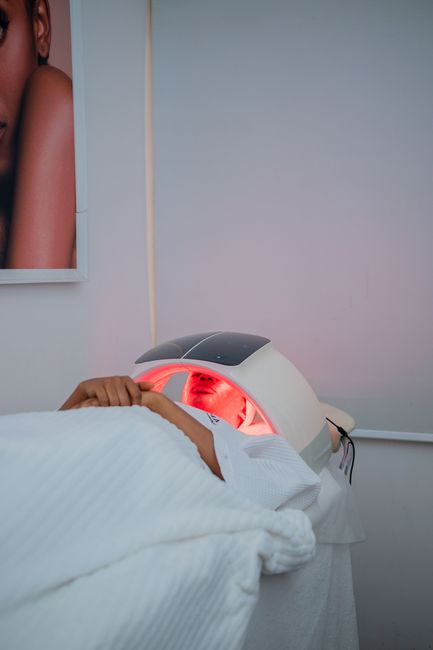
Red Light Therapy (RLT), also known as photobiomodulation (PBM), uses specific wavelengths of red and near-infrared light to penetrate the skin and stimulate cellular activity. This non-invasive treatment has gained significant attention for its therapeutic benefits across various health and wellness applications.
Historically, light therapy has roots in early 20th-century research, but modern RLT devices utilize advanced LED technology to deliver precise wavelengths. Its evolution has led to a better understanding of how light interacts with the body’s cells, opening new avenues for treatment in dermatology and beyond.
2. How Red Light Therapy Works: The Science Behind the Glow
At the core of RLT’s efficacy is the process called photobiomodulation (PBM). This involves light interacting with chromophores within cells, particularly cytochrome c oxidase in the mitochondria.
When light energy is absorbed, it triggers a cascade of cellular responses, including increased ATP production (cellular energy), modulation of nitric oxide, and activation of various signaling pathways. These mechanisms promote healing, reduce inflammation, and enhance cellular repair.
Specific wavelengths of light are crucial, with red light (typically 630-700 nm) primarily targeting superficial skin layers and near-infrared light (700-1000 nm) penetrating deeper into tissues. This differential penetration allows RLT to address a range of concerns from surface skin issues to deeper cellular processes.
3. Red Light Therapy for Hair Growth: Unlocking Thicker, Fuller Hair
Red Light Therapy offers several benefits for individuals experiencing hair thinning or loss. It works by stimulating dormant hair follicles, increasing blood circulation to the scalp, and prolonging the hair growth phase.
By enhancing cellular energy in the follicles, RLT can lead to increased hair density and thickness. It supports the hair growth cycle by encouraging the anagen (growth) phase and potentially reducing the catagen (transition) and telogen (resting) phases.
Scientific Evidence Supporting Hair Regrowth
Clinical studies have consistently demonstrated RLT’s effectiveness in promoting hair growth. For instance, a study published in Lasers in Surgery and Medicine by Lanzafame et al. (2013) found that visible red LED light produced measurable increases in hair density in men with androgenetic alopecia. This indicates its real-world effectiveness for at-home use laser devices.
Further supporting these findings, a systematic review and meta-analysis published in Dermatologic Therapy (Zhou et al., 2020) concluded that low-level light therapy (LLLT) significantly improved hair density outcomes in patients with androgenic alopecia, reinforcing its role as a clinically serious tool for hair loss management.
RLT is particularly beneficial for conditions like androgenetic alopecia (male and female pattern baldness). It provides a non-invasive option to stimulate hair follicles and improve scalp health, leading to noticeable improvements over time.
4. Red Light Therapy for Skin Aging: Rejuvenation and Anti-Aging Benefits
For skin aging, Red Light Therapy offers a powerful approach to rejuvenation. It helps reduce the appearance of wrinkles and fine lines, improves skin elasticity, and boosts collagen production.
RLT promotes dermal remodeling and cellular repair by activating fibroblasts, the cells responsible for producing collagen and elastin. This leads to a firmer, smoother skin texture and enhanced wound healing capabilities.
Scientific Evidence Supporting Skin Rejuvenation
Research underscores RLT’s anti-aging potential. A controlled trial published in Photomedicine and Laser Surgery (Wunsch A, Matuschka K, 2014) evaluated the efficacy of red and near-infrared light treatment, finding significantly improved skin complexion, reduced roughness, and increased intradermal collagen density in treated subjects compared to controls. This study concluded both novel light sources demonstrated efficacy and safety for skin rejuvenation.
Consistent treatment also aids in reducing inflammation, making it beneficial for various skin concerns. These include lessening the visibility of sun damage and improving the texture of acne scars, contributing to a more even and youthful complexion.
5. Optimal Wavelengths for Skin and Hair Benefits
The effectiveness of Red Light Therapy is highly dependent on using the correct wavelengths. Different wavelengths penetrate the skin to varying depths and interact with specific cellular components to elicit therapeutic effects.
For skin rejuvenation, wavelengths in the range of 630-680 nm (red light) are often considered optimal, as they are well-absorbed by the epidermis and dermis. These wavelengths are effective for stimulating collagen production and improving superficial skin concerns.
For hair growth and deeper tissue penetration, near-infrared (NIR) wavelengths, typically between 810-850 nm, are beneficial. These longer wavelengths can reach the hair follicles and deeper scalp tissues, promoting circulation and cellular energy at a deeper level.
- Red Light (e.g., 630-680 nm): Primarily targets skin surface, enhancing collagen, reducing inflammation, and improving complexion.
- Near-Infrared Light (e.g., 810-850 nm): Penetrates deeper, beneficial for hair follicles, muscle recovery, and overall deeper cellular repair.
6. What to Expect from Red Light Therapy: Results and Consistency
When starting Red Light Therapy, it’s essential to set realistic expectations regarding visible results. RLT works by stimulating natural cellular processes, meaning improvements are often gradual and cumulative rather than immediate.
Most individuals begin to notice subtle changes in skin texture or hair density after several weeks of consistent use. Significant improvements typically become more apparent after 3 to 6 months of regular treatment sessions.
Actionable Advice for Effective Use:
- Consistency is Key: Adhere to a regular treatment schedule, often 3-5 times per week, for optimal results. Skipping sessions can prolong the time it takes to see benefits.
- Follow Device Instructions: Always use your RLT device according to the manufacturer’s guidelines for session duration and frequency.
- Clean Skin/Scalp: Ensure the treatment area is clean and free of makeup, lotions, or hair products that could block light penetration.
- Protect Your Eyes: While RLT is generally safe, it’s advisable to use eye protection provided with your device, especially when treating the face.
- Monitor Progress: Take before-and-after photos every 4-8 weeks to objectively track changes in your skin and hair over time.
- Be Patient: Cellular regeneration takes time. Continue with your regimen even if results aren’t immediately dramatic.
Factors such as age, overall health, and the severity of the condition being treated can influence individual results. Discussing your goals with a healthcare professional can help tailor the most effective RLT strategy for you.
7. Safety and Potential Considerations
Red Light Therapy is widely considered safe, non-invasive, and well-tolerated by most individuals. Unlike UV light, RLT does not damage skin cells or increase the risk of skin cancer, as it operates on entirely different wavelengths.
Possible mild side effects are rare but can include temporary redness or tightness in the treated area. These usually subside quickly. Ensuring proper distance from the device and following recommended session durations can help mitigate any discomfort.
While generally safe, certain individuals should exercise caution or consult a doctor before starting RLT. This includes pregnant women, individuals with epilepsy, or those taking photosensitizing medications. Always prioritize devices that are FDA-cleared, indicating they have met specific safety and efficacy standards.
Looking for a Tested Solution for Your Health Goals?
👉 See Our Verified Pick & Get Special Discount on BioFit Probiotic
8. Conclusion: Embracing the Potential of Red Light Therapy
Red Light Therapy represents a promising, non-pharmacological approach to enhancing both skin health and hair growth. Its ability to stimulate cellular activity, boost collagen production, and improve circulation makes it a versatile tool in the quest for anti-aging and rejuvenation.
With ongoing research and technological advancements, RLT is poised to become an even more integral part of personalized wellness and aesthetic routines. Its safety profile and demonstrable benefits offer a compelling alternative for those seeking natural ways to support their body’s healing and regenerative capabilities.